

NVH testing market seen reaching $4.68 billion by 2035
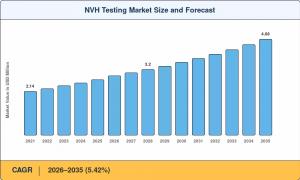
The global NVH testing market is projected to grow from $2.71 billion in 2025 to $4.68 billion by 2035 as electric vehicles, stricter noise rules and comfort-focused design push automakers and industrial firms to test more aggressively. Powertrain NVH testing led the market in 2025, reflecting the added acoustic challenges created by EV drivetrains.
Why it matters: - NVH testing is becoming more important as vehicles, aircraft and industrial machines are pushed to be quieter, smoother and more reliable. - Electric vehicles remove engine noise, making other sound and vibration issues easier to detect and harder to ignore. - Stronger noise regulations and rising consumer expectations are pushing manufacturers to invest in earlier and more advanced testing.
What happened: - The NVH Testing Market was valued at $2.57 billion in 2024. - The market is projected to rise to $2.71 billion in 2025 and reach $4.68 billion by 2035. - That forecast implies a 5.42% compound annual growth rate from 2025 to 2035. - Powertrain NVH testing led the market with a 31% revenue share in 2025. - The market covers applications across automotive, aerospace, industrial equipment, consumer electronics and rail transportation.
The details: - Automotive makers are investing in sensors, accelerometers, modal analysis tools and simulation software to improve vehicle refinement. - EVs expose tire-road interaction, drivetrain harmonics, gear meshing frequencies, body vibration and cabin acoustics that were previously masked by combustion noise. - Regulatory authorities in major automotive markets are tightening standards around vehicle acoustics, occupational noise exposure and environmental sound management. - Hardware remains a major segment because of demand for vibration sensors, microphones, signal analyzers, accelerometers and data acquisition systems. - Software is growing faster as companies adopt digital engineering, predictive simulation and virtual testing platforms. - Acoustic testing, transfer path analysis and pass-by noise testing are gaining importance as manufacturers try to improve cabin sound quality and comply with noise rules. - Sound quality testing is seeing strong demand as brands compete on premium cabin experience. - Automotive remains the largest end-use segment because of high-volume production and EV platform investment. - Aerospace and industrial manufacturing are expected to grow as firms expand predictive maintenance, structural diagnostics and safety programs. - North America remains a major market because of its automotive and aerospace base, with the United States supported by high R&D spending and advanced simulation adoption. - Europe should stay strong because of strict environmental rules, mature automotive engineering and faster EV adoption. - Asia-Pacific is projected to grow the fastest, driven by industrialization, higher automotive output and rising EV adoption in China, Japan, South Korea and India. - Latin America and the Middle East & Africa are expected to grow more gradually as industrial and transportation investment expands. - The report includes links for a sample PDF, customization requests and premium research insights.
Between the lines: - The market is shifting from traditional physical testing toward hybrid workflows that combine hardware instrumentation with simulation, analytics and cloud monitoring. - AI-powered diagnostics and real-time testing systems are becoming differentiators because they can shorten development cycles and reduce redesign costs. - EVs and lightweight materials are creating new acoustic engineering problems, which should keep NVH testing tied closely to vehicle development for years. - The strongest demand appears to be moving toward integrated testing ecosystems rather than standalone equipment.
What’s next: - More automakers are likely to expand virtual NVH analysis, digital twins and predictive engineering as software-defined vehicles become more common. - Industrial customers are expected to use vibration monitoring more heavily for predictive maintenance and downtime reduction. - The market is expected to keep expanding through 2035 as electrification, regulation and comfort standards continue to rise. - Manufacturers are likely to keep investing in integrated testing hardware, analytics and simulation tools to meet more complex engineering requirements.
The bottom line: - NVH testing is moving from a niche engineering function to a core requirement for EVs, aerospace and industrial systems seeking better comfort, compliance and reliability.
Disclaimer: This article was produced by AGP Wire with the assistance of artificial intelligence based on original source content and has been refined to improve clarity, structure, and readability. This content is provided on an “as is” basis. While care has been taken in its preparation, it may contain inaccuracies or omissions, and readers should consult the original source and independently verify key information where appropriate. This content is for informational purposes only and does not constitute legal, financial, investment, or other professional advice.
Sign up for:
Deutschland Times
The daily local news briefing you can trust. Every day. Subscribe now.
Check Your Email!
We sent a one-time activation link to: .
Confirm it's you by clicking the email link.
If the email is not in your inbox, check spam or try again.
Welcome back!
is already signed up. Check your inbox for updates.