

Heat Detector Tester Market to Reach US$0.4 Bn by 2033, Says Persistence Market Research
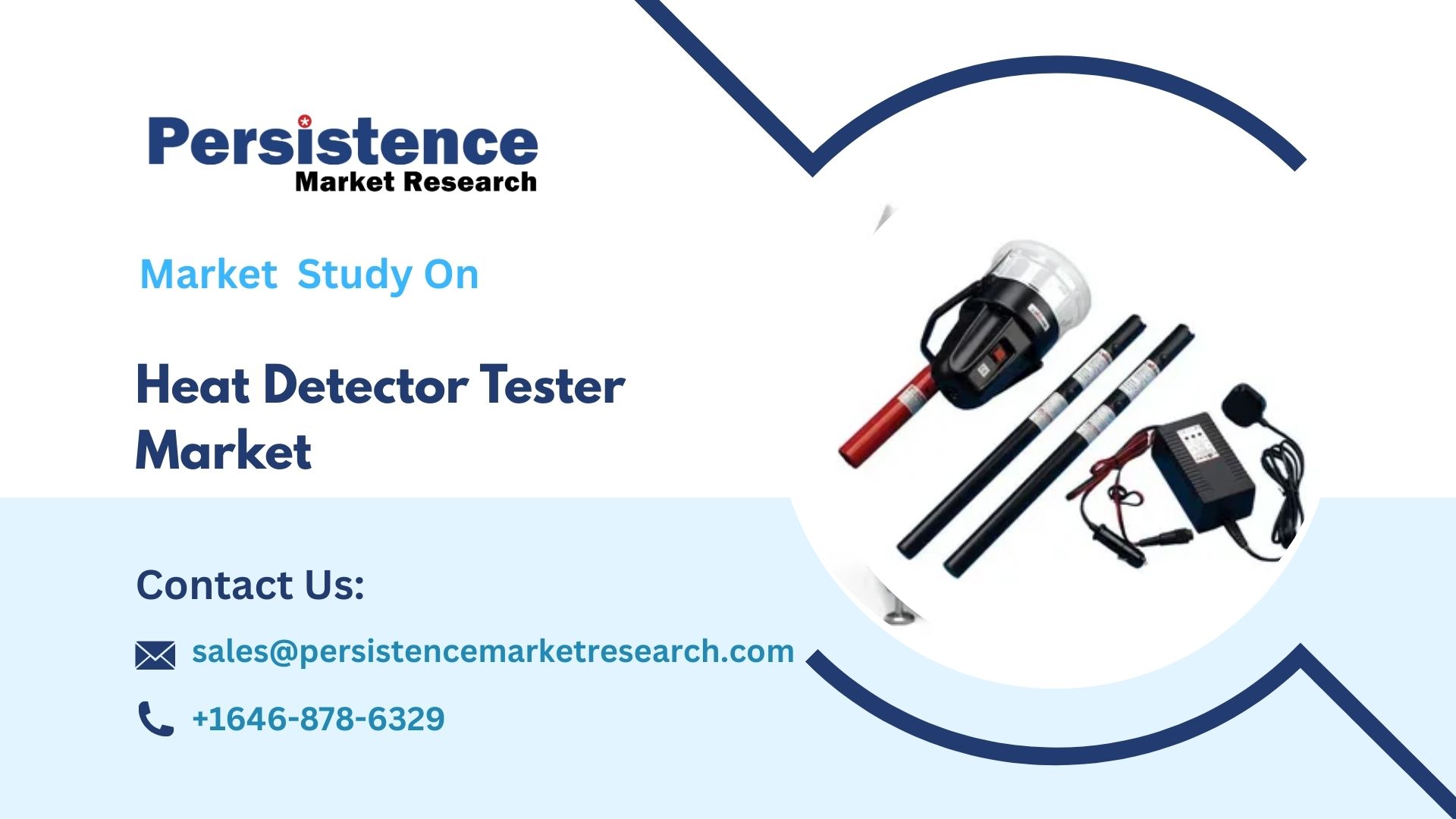
Heat Detector Tester Market
Rising construction and stricter safety regulations are boosting demand for heat detector testing equipment.
LONDON, UNITED KINGDOM, March 5, 2026 /EINPresswire.com/ -- The global heat detector tester market is gaining significant momentum as fire safety compliance becomes a critical priority across residential, commercial, and industrial facilities. Heat detector testers are specialized tools used to verify the functionality and responsiveness of heat detectors installed in fire alarm systems. These devices help maintenance teams ensure that fire detection systems perform reliably during emergencies. According to market estimates, the global heat detector tester market is expected to reach US$0.3 billion in 2026 and grow to approximately US$0.4 billion by 2033, registering a CAGR of 6.2% between 2026 and 2033. The expansion of the market is primarily driven by stringent fire safety regulations mandated by organizations such as the National Fire Protection Association (NFPA) and the International Code Council (ICC), which require periodic inspection and testing of fire detection systems.
Increasing construction activities across emerging economies are also playing a crucial role in driving market growth. As new commercial complexes, industrial facilities, hospitals, and residential buildings are developed, the installation of fire detection systems becomes mandatory, thereby increasing the demand for reliable testing equipment. Among the various product categories, portable heat detector testers dominate the market due to their ease of use, portability, and suitability for routine maintenance operations. In terms of geography, North America holds the leading share in the market owing to strict safety standards, a well-established building infrastructure, and a strong culture of regulatory compliance in fire protection systems.
𝐆𝐞𝐭 𝐚 𝐒𝐧𝐞𝐚𝐤 𝐏𝐞𝐞𝐤, 𝐒𝐚𝐦𝐩𝐥𝐞 𝐏𝐃𝐅 𝐈𝐧𝐬𝐢𝐝𝐞: https://www.persistencemarketresearch.com/samples/32982
Key Highlights from the Report
• The global heat detector tester market is projected to grow at a CAGR of 6.2% between 2026 and 2033.
• Market valuation is expected to increase from US$0.3 billion in 2026 to US$0.4 billion by 2033.
• Strict fire safety regulations from organizations such as NFPA and ICC are driving demand for testing equipment.
• Growing construction activities in emerging economies are boosting installation of fire detection systems.
• Portable heat detector testers dominate the market due to flexibility and ease of operation.
• Smart buildings and IoT-enabled maintenance solutions are increasing demand for advanced testing devices.
Market Segmentation
The heat detector tester market can be segmented based on product type, end-user industry, and distribution channel. In terms of product type, the market includes portable heat detector testers, telescopic testers, and integrated testing systems. Portable testers are widely adopted by technicians and facility management teams because they provide quick and convenient functionality testing during routine inspections. Telescopic testers, which are designed for testing ceiling-mounted detectors at higher elevations, are also gaining popularity in large commercial and industrial facilities.
From an end-user perspective, the market caters to several sectors including commercial buildings, industrial facilities, residential complexes, and institutional infrastructure such as hospitals, airports, and educational institutions. Commercial facilities, particularly office buildings, shopping malls, and hotels, account for a substantial share of the market due to strict safety compliance requirements and frequent system inspections.
Distribution channels also play an important role in shaping market growth. Traditionally, heat detector testers have been sold through specialized safety equipment distributors and industrial supply networks.
𝐎𝐧𝐞 𝐂𝐥𝐢𝐜𝐤 → 𝐘𝐨𝐮𝐫 𝐂𝐮𝐬𝐭𝐨𝐦 𝐌𝐚𝐫𝐤𝐞𝐭 𝐕𝐢𝐞𝐰: https://www.persistencemarketresearch.com/request-customization/32982
Regional Insights
Regional trends in the heat detector tester market vary depending on regulatory frameworks, construction activities, and technological adoption. North America remains the leading market due to stringent fire protection standards and widespread adoption of advanced safety technologies. Regulatory authorities in the United States and Canada enforce strict inspection and maintenance requirements for fire detection systems, creating consistent demand for testing equipment.
Europe also represents a significant market driven by comprehensive fire safety legislation and increasing modernization of commercial infrastructure. Countries such as Germany, the United Kingdom, and France have strong regulatory frameworks that require routine maintenance and testing of fire alarm systems, which directly supports market growth.
The Asia-Pacific region is expected to experience the fastest growth during the forecast period. Rapid urbanization, rising construction of commercial and residential buildings, and growing industrial development in countries such as China, India, and Southeast Asia are driving demand for fire detection and safety equipment.
Market Drivers
One of the most significant drivers of the heat detector tester market is the implementation of strict fire safety regulations across multiple sectors. Regulatory bodies such as the NFPA and ICC require periodic testing and maintenance of fire detection systems to ensure operational reliability. These regulations compel building owners and facility managers to invest in reliable testing equipment.
Market Restraints
Despite the positive growth outlook, the market faces certain challenges that may restrain its expansion. One of the key restraints is the high cost of advanced testing equipment, particularly for integrated or automated systems used in large facilities. Smaller contractors and maintenance service providers may hesitate to invest in expensive equipment, especially in price-sensitive markets.
Market Opportunities
The heat detector tester market presents several opportunities for growth as fire safety technologies continue to evolve. One major opportunity lies in the development of smart testing devices equipped with digital connectivity and real-time reporting capabilities. Such tools can automatically record inspection results and integrate them with facility management systems, improving compliance tracking and maintenance efficiency.
𝐆𝐞𝐭 𝐈𝐧𝐬𝐭𝐚𝐧𝐭 𝐀𝐜𝐜𝐞𝐬𝐬 𝐓𝐨𝐝𝐚𝐲—𝐌𝐚𝐤𝐞 𝐒𝐦𝐚𝐫𝐭𝐞𝐫 𝐃𝐞𝐜𝐢𝐬𝐢𝐨𝐧𝐬 : https://www.persistencemarketresearch.com/checkout/32982
Company Insights
• Honeywell International Inc.
• Siemens AG
• Johnson Controls International plc
• Hochiki Corporation
• Solo (No Climb Products Ltd.)
• Bosch Building Technologies
• Potter Electric Signal Company
• Apollo Fire Detectors Ltd.
• Detectortesters (SDi Group plc)
• Halma plc
Recent developments in the market include the introduction of smart heat detector testing devices that integrate with digital facility management platforms, enabling automated inspection reporting and compliance tracking. Additionally, several manufacturers are launching lightweight telescopic testing systems with improved battery efficiency and wireless connectivity, designed to enhance technician productivity during maintenance operations.
𝐑𝐞𝐥𝐚𝐭𝐞𝐝 𝐑𝐞𝐩𝐨𝐫𝐭𝐬:
Evaporative Cooling Market: The evaporative cooling market is expected to reach US$13.2 billion by 2033, growing at a 7.1% CAGR from 2026.
Coordinate Measuring Machines Market : The coordinate measuring machines market is expected to reach US$7.0 billion by 2033, growing at an 8.4% CAGR.
Ganesh Dukare
Persistence Market Research
+1 646-878-6329
email us here
Visit us on social media:
LinkedIn
Instagram
Facebook
YouTube
X
Legal Disclaimer:
EIN Presswire provides this news content "as is" without warranty of any kind. We do not accept any responsibility or liability for the accuracy, content, images, videos, licenses, completeness, legality, or reliability of the information contained in this article. If you have any complaints or copyright issues related to this article, kindly contact the author above.
